

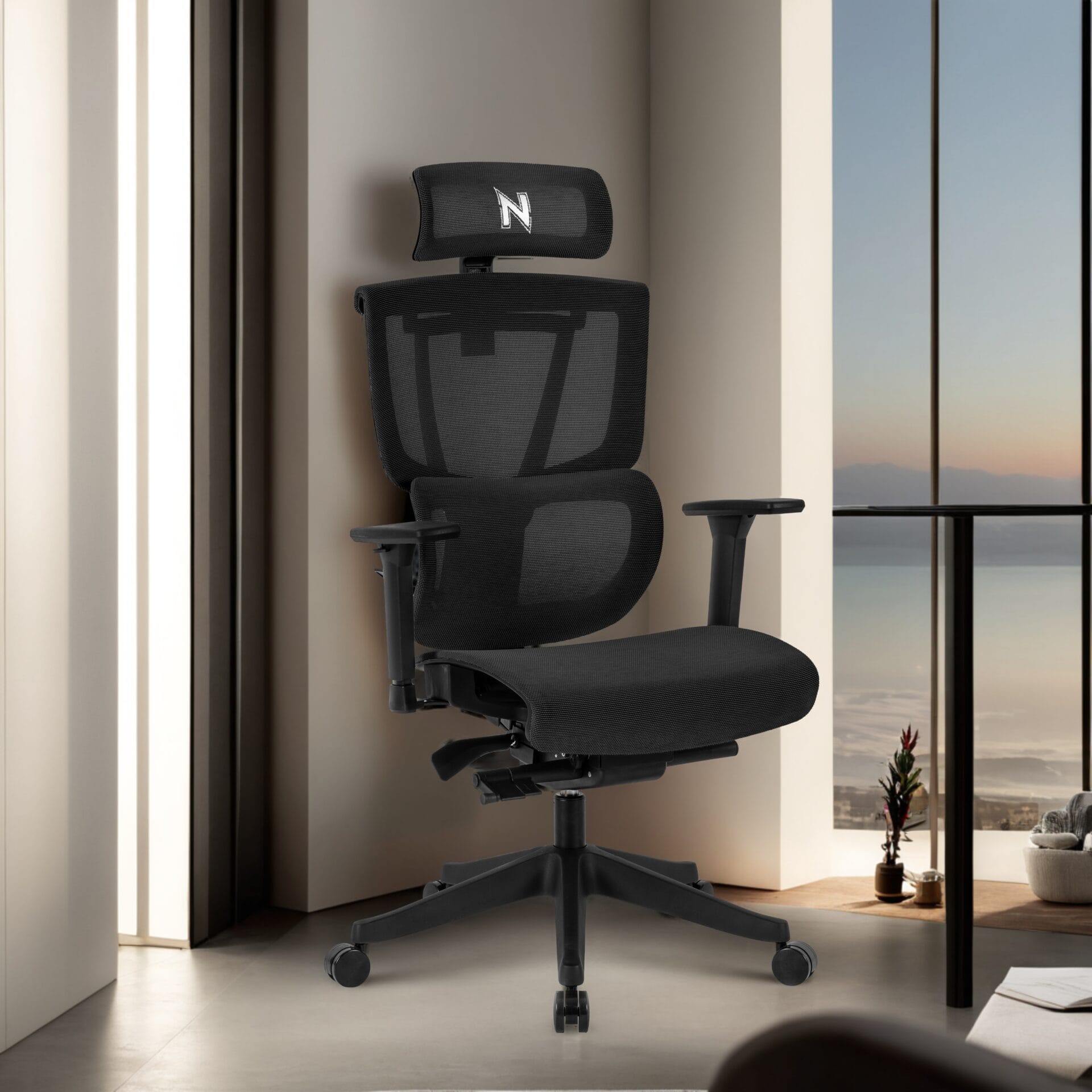
One of the first things you should do while seated in your chair when adjusting your chair for an ergonomic seating position is to set the height of the chair seat so that you can put your feet flat on the floor, your knees are at a 90 degree angle and your hips are level with your spine. This is the basis for further adjustments and will help you maintain good seated posture.
Seat Height Sets the Base for Posture
A chair of the correct seat height will support your whole sitting posture. Your lower back will naturally curve if your feet are flat on the floor beneath and your thighs are parallel to the floor. This lessens spine strain in order to help avoid slouching or leaning.
Adjusting the lumbar support, armrest height and recline will be easier for most people if the height is set. Adjusting these settings will be less effective and may even be counterproductive if the height is not set.
Lumbar Support Should Come Next
After you've set the chair height, move on to lumbar support. The lumbar area of the back should be supported to hold its normal curve and prevent a rounded shape. This reduces muscle fatigue and encourages a straighter posture while seated.
The lumbar height and lumbar depth are the next variables, which mechanically allow the lumbar support shape to be adapted to the user's back shape. At the correct seat height, this generally results in a more comfortable sitting position.
Final Thoughts
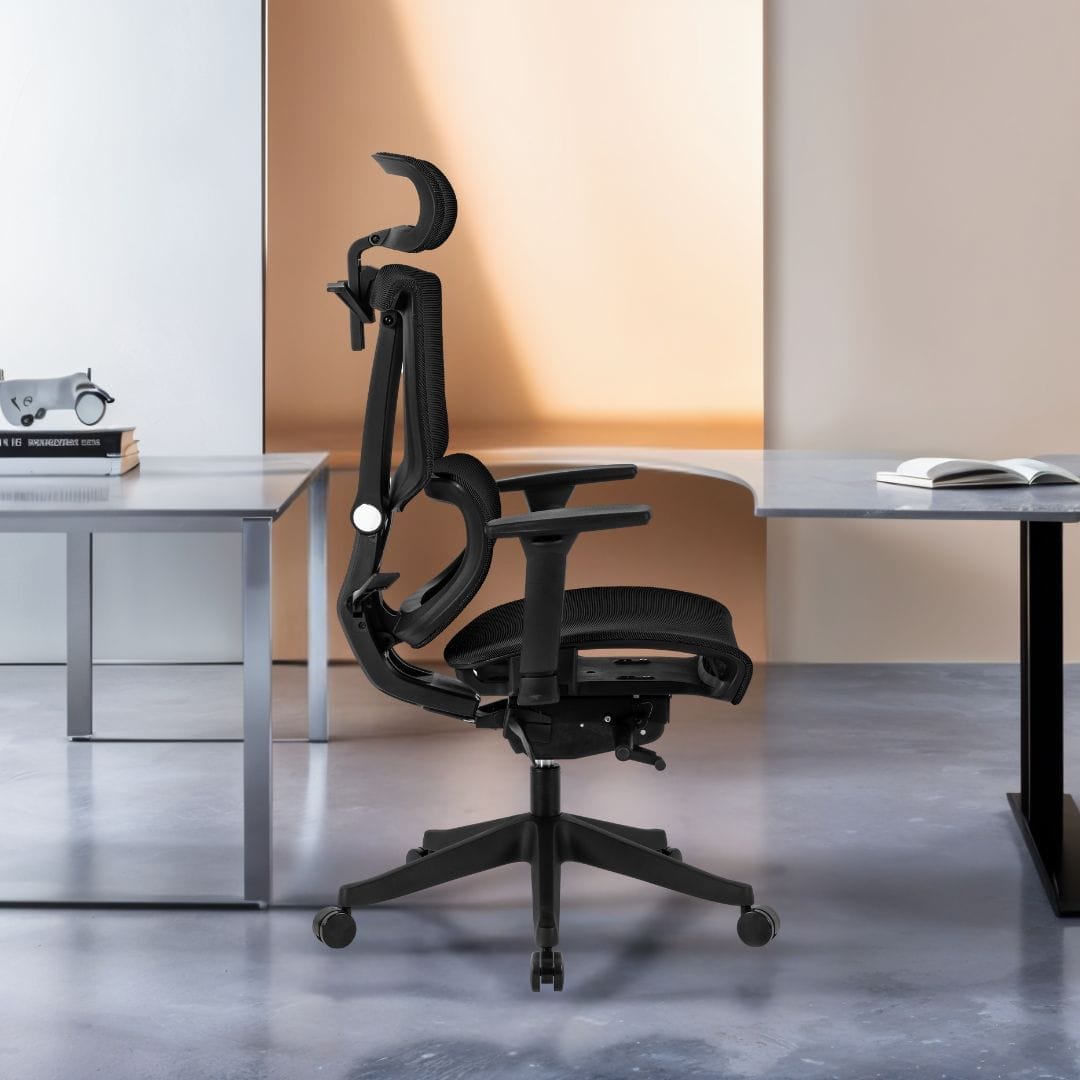
Start with seat height as your primary adjustment to build a strong posture foundation. Follow with lumbar support to maintain healthy spinal alignment. These two steps set the stage for comfortable and productive sitting, allowing the rest of your chair adjustments to work as intended.